Operations
Part of Operating a creator studio through explicit states and protected masters
A desk-only launch review of a studio workflow, and why it holds
A desk-only launch review of a proposed England studio workflow, with named evidence gates, conflicts, untested boundaries and a documented hold verdict.
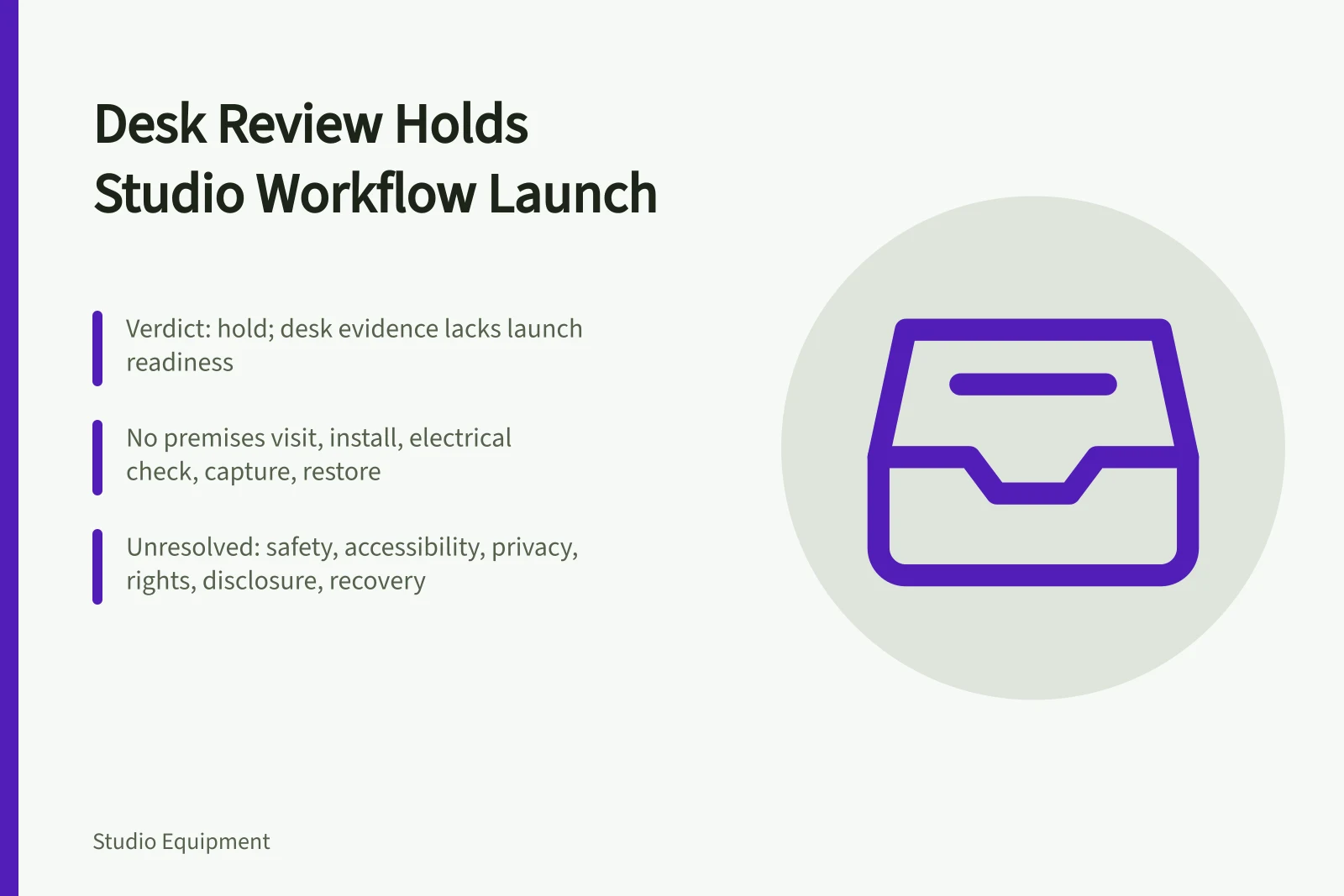
Verdict: HOLD. This creator studio equipment launch review examines the proposed operating record for a fixed-desk spoken tutorial in an England studio. The desk evidence does not establish that the actual equipment, room, accessible output, data route, rights, disclosure or recovery process is ready.
What to take away
- The verdict is hold because the desk evidence does not establish readiness for launch.
- Safety, accessibility, privacy, rights, disclosure and recovery all remain unresolved on the current record.
- No premises visit, installation, electrical check, capture, export or restore occurred before this review.
- A later reviewer must confirm every record refers to the same workflow version before any claim is supported.
Reviewer, date and scope
Reviewer role: independent studio-operations launch reviewer, to be assigned before publication.
Review date: 6 September 2026.
Method: documentary comparison of the proposed workflow with current HSE, OPSS, ICO, NCSC, IPO and ASA records. No premises visit, purchase, installation, electrical check, capture, export, accessibility assessment, restore, incident exercise or publication occurred.
Conflicts: no manufacturer, retailer, software provider, agency, sponsor or affiliate provided money, equipment, access or influence. There are no affiliate links in this review.
The subject is the workflow and its evidence pack, not a particular product's performance. No brand, model or supplier is rated.
Evidence examined
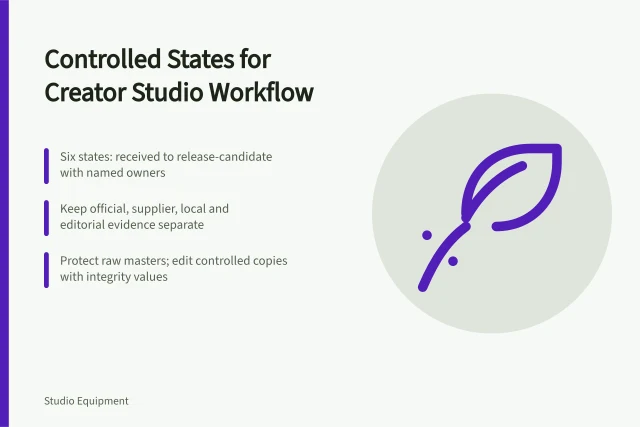
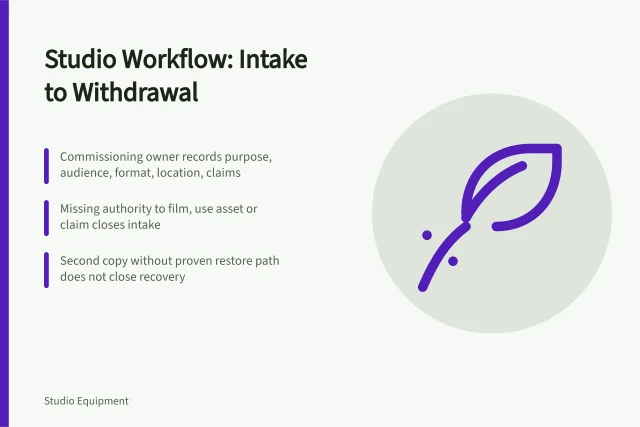
The available material is the proposed state sequence: intake, evidence review, capture authority, recording, controlled edit, release candidate, approval, publication and correction or withdrawal. It names intended functions and evidence categories. It does not contain completed local test records or signed specialist decisions.
HSE's PUWER overview requires attention to suitable, maintained and inspected work equipment in Great Britain. OPSS maintains a product-safety guidance directory with separate Great Britain and Northern Ireland routes. The pack has no exact asset register, instruction set, condition record, competent room assessment or current supply evidence. Safety remains unresolved.
Access, data and rights gaps
The proposed output includes captions and a transcript, but no released candidate or user journey was inspected. The government's accessible-formats record supports early planning and caption provision in public communications; it does not certify this setup. Accessibility remains unresolved pending a named specialist's check of the actual content and route.
The ICO's design guidance supports lifecycle privacy work. No approved data map, role decision, retention schedule, service contract or test-account record was supplied. Privacy approval therefore remains open.
The IPO's digital-images notice explains why online material may still require permission. No source-asset ledger or contributor permission was inspected. Rights readiness is not demonstrated.
Disclosure and recovery gaps
ASA and CAP's influencer resources cover commercial relationships and ad identification. The pack contains no final commercial classification, claim file or rendered disclosure example. Advertising review cannot pass on policy text alone.
The NCSC's backup guidance says restoration should be checked. No authorised restore result, clean fallback or incident contact exercise was provided. Recovery is untested.
Conditions for a new review
Submit the exact asset and software register, signed safety decision, authorised sample, final captions and transcript, accessibility result, data map and processor terms where needed, rights ledger, commercial classification, disclosure rendering, restore evidence, incident rehearsal, correction route and named deputies. Each specialist must retain independent stop authority.
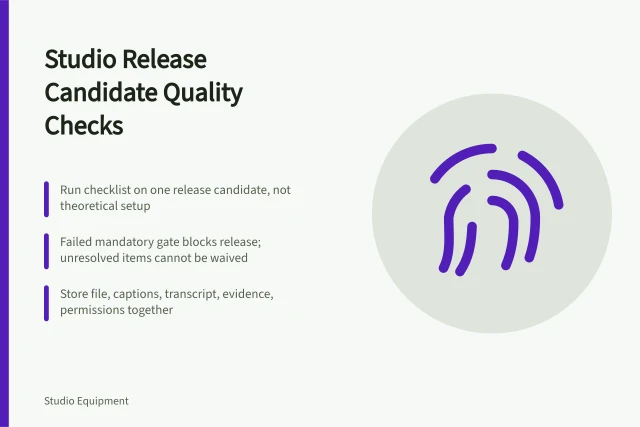
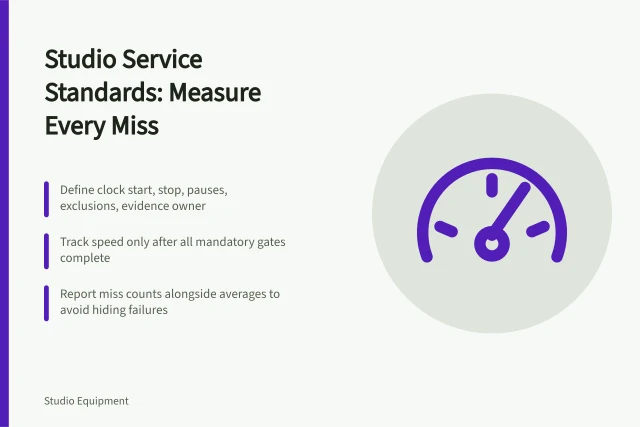
A later reviewer should verify that every record refers to the same workflow version and record pass, fail, unresolved or not applicable with reasons. Until then, no production launch, safety, compliance, accessibility, quality, availability or outcome claim is supported.
Before you act
- Check the exact asset and software register is submitted.
- Confirm a signed safety decision and competent room assessment exist.
- Verify captions, transcript and accessibility result for the actual content.
- Obtain the data map, retention schedule and processor terms.
- Secure the rights ledger and contributor permissions.
- Require restore evidence and an incident rehearsal before launch.
Common questions
Why does the review return a hold verdict?
The desk evidence does not establish that the actual equipment, room, accessible output, data route, rights, disclosure or recovery process is ready. No premises visit, purchase, installation, electrical check, capture, export, accessibility assessment, restore, incident exercise or publication occurred, so safety and compliance remain unresolved.
What evidence was actually examined for this review?
The available material is the proposed state sequence from intake through publication and correction or withdrawal. It names intended functions and evidence categories but contains no completed local test records or signed specialist decisions. The reviewer compared this proposed workflow against current HSE, OPSS, ICO, NCSC, IPO and ASA records.
What must be submitted before a new review can take place?
The exact asset and software register, signed safety decision, authorised sample, final captions and transcript, accessibility result, data map, processor terms, rights ledger, commercial classification, disclosure rendering, restore evidence, incident rehearsal, correction route and named deputies. Each specialist must retain independent stop authority.