Operations
Part of Operating a creator studio through explicit states and protected masters
Running a studio from intake to withdrawal with named owners
Operate an England creator studio through controlled intake, capture, editing, release, correction and recovery with named owners and evidence gates.
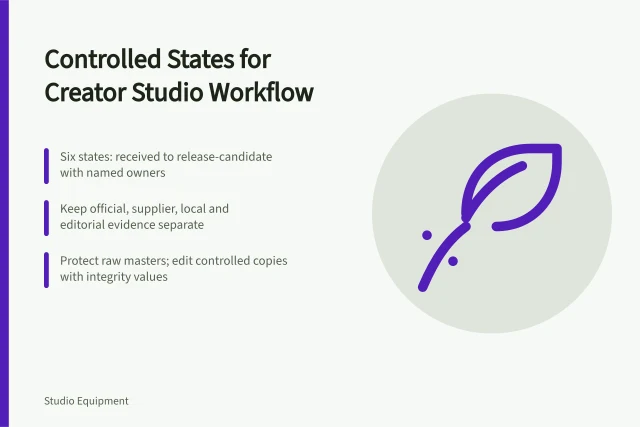
A creator studio equipment operating workflow should make the next authorised action obvious. This one is for a fixed-desk spoken tutorial produced in England. It moves one job from intake to archive while leaving safety, privacy, access, rights and advertising decisions with separate owners.
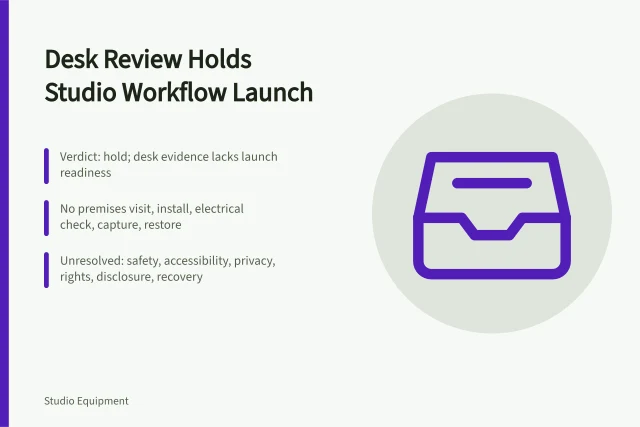
The workflow is an editorial design dated 6 September 2026. It has not been run on a device, production file or publishing account.
What to take away
- A studio workflow should make the next authorised action obvious at every stage.
- Safety, privacy, access, rights and advertising decisions stay with separate named owners.
- Missing authority to film, use an asset or make a claim closes intake.
- A second copy without a proven restore path does not close recovery.
- If evidence points to different versions, return the job to edit control.
Intake and evidence
Intake evidence checklist
- Record purpose, audience, format, location
- List contributors, source assets, claims
- Note commercial relationship and required date
- Assign job identifier and current brief
- Confirm authority to film, use asset, make claim
- Create asset record for exact equipment build
Create an asset record for the exact equipment and software build. HSE's PUWER overview supports checks for suitability, maintenance, inspection, information and training in Great Britain. The safety reviewer decides what the actual room and work practice require. An operator cannot waive that decision.
Authorise capture
The operator checks register identity, physical condition, power, cables, mounting, storage, clock, approved settings and backup destination. Use synthetic or specifically authorised material for setup. If the model, software, room or instruction differs from the approved record, stop and return to evidence review.
Before real capture, the privacy owner confirms purpose, access, location, retention and deletion for account records, footage and voice. The ICO's data-protection-by-design page says data protection belongs at design and throughout a process lifecycle. Record the decision; do not infer permission from attendance.
Capture and ingest
At session start, log operator, contributors, asset identifiers, software version, settings and approved brief. Preserve unexpected events. A warning, damaged connection, missing permission or unplanned personal information triggers a pause.
After capture, copy the raw file to controlled storage, verify file identity and protect the master. Editing begins from a versioned working copy. The NCSC's backup guidance says organisations should protect backups and check restoration. A second copy without a proven restore path does not close recovery.
Edit and approve
The editor records cuts, processing, inserted material, caption version, transcript and export settings. The rights editor links every external image, sound, graphic and contributor permission to the intended use. The IPO's digital-images notice explains that online availability does not itself provide reuse permission.
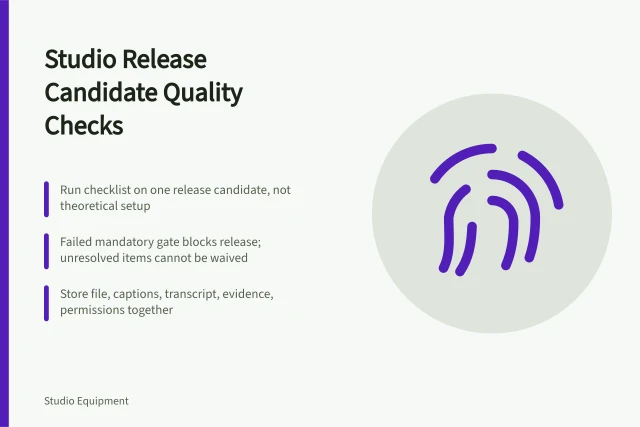
The quality reviewer checks technical specification, speech against the locally approved method, synchronisation, complete edits, captions, transcript, disclosures, permissions and archive package. The publisher sees pass, fail, unresolved or not applicable for every gate. Not applicable needs a reason and owner.
At each hand-off, record the sending role, receiving role, file version, evidence bundle, open exception and acceptance time. The receiver confirms that the package is readable and complete before ownership changes. If the evidence points to different versions, return the job to edit control instead of asking the publisher to reconcile it at release.
Release, correct or withdraw
Release records the public file, URL, approval, time and evidence version. Monitor the approved contact route for safety, privacy, rights, accuracy and accessibility reports. A material concern can move the item to held or withdrawn while the relevant specialist decides the response.
Log the affected version, interim action, corrected asset, public notice and final disposition. Archive only the approved package and required audit evidence. Delete other material under the documented schedule. If recovery, authority or a mandatory review is missing, keep the workflow closed rather than meeting the date through an undocumented workaround.
Before you act
- Record purpose, audience, format, location, contributors and claims at intake.
- Create an asset record for the exact equipment and software build.
- Confirm privacy purpose, access, retention and deletion before real capture.
- Copy the raw file to controlled storage and protect the master.
- Link every external asset and permission to its intended use.
- Log affected version, interim action, corrected asset and final disposition.
Common questions
What happens if authority to film, use an asset or make a claim is missing?
The article says missing authority to film, use an asset or make a claim closes intake. The commissioning owner records purpose, audience, output format, location, contributors, source assets, claims, commercial relationship, destination and required date, and the job receives an identifier and a current brief.
Who decides what the actual room and work practice require?
The safety reviewer decides what the actual room and work practice require, and an operator cannot waive that decision. HSE's PUWER overview supports checks for suitability, maintenance, inspection, information and training in Great Britain, while the commissioning owner records the job details.
What should happen when evidence points to different versions?
The article says that if the evidence points to different versions, return the job to edit control instead of asking the publisher to reconcile it at release. At each hand-off, record the sending role, receiving role, file version, evidence bundle, open exception and acceptance time.