Foundations
Part of How to soundproof a room for recording UK: cheap DIY guide
How to soundproof a room for recording UK: cheap DIY guide
A UK guide to soundproofing a room for recording, covering party walls, cheap DIY acoustic treatment, echo reduction and neighbour noise rules.
What to take away
- Cheap DIY cuts echo and makes a small room usable for recording, but it rarely stops a neighbour hearing bass through a shared wall.
- Seal air gaps and add absorption before structural work, because leaks and bare walls cause most of the problem.
- Work on a shared wall in England and Wales can trigger Party Wall Act notices, building control approval or landlord consent.
- Measure with the same source and microphone position before and after each change, so decisions rest on evidence.
Soundproofing and acoustic treatment are not the same job
Soundproofing blocks sound travelling between two spaces. Acoustic treatment changes how sound behaves inside one space. A duvet pinned to a wall does the second job and almost none of the first.
Soundproofing vs acoustic treatment
Soundproofing
- Goal
- Block sound between spaces
- Depends on
- Mass, airtight seals, path break
- Duvet on wall
- Almost none of it
- Shared wall
- The hard problem
Acoustic treatment
- Goal
- Change sound inside one space
- Depends on
- Absorbing reflected energy
- Duvet on wall
- Does this job
- Shared wall
- Not the boundary
Soundproofing depends on mass, airtight seals and, where possible, a break in the physical path between surfaces.
What the trade calls acoustic treatment does something different. It absorbs energy that would otherwise bounce off a wall and back into your microphone.
In a terrace or semi-detached house, the shared wall is the hard problem. You can add mass to your side, but bass will still find a flanking route through floor joists, a chimney breast or a suspended ceiling.
Find the leaks before you buy anything
Air is the easiest path for sound, so work through the room in a fixed order.
Find leaks before buying panels
- Record a baseline daily for a week
- Walk boundary noting draughts and gaps
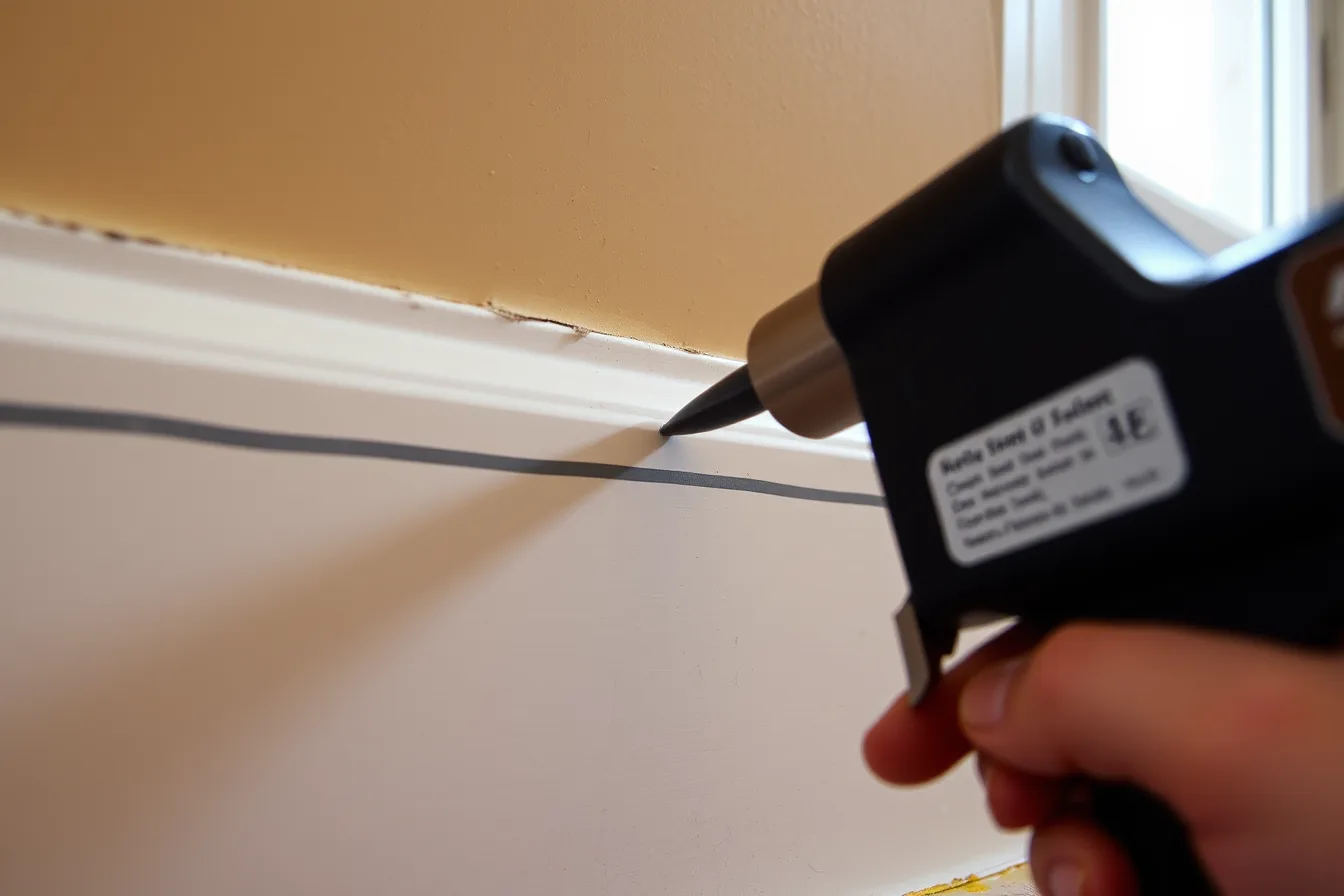
- Seal small gaps and fit door seals
- Swap hollow door for solid-core
- Add absorption at reflection points
- Log each change with before-and-after reading
What each measure actually fixes
What each measure fixes
Cuts echo inside
- Seal skirting boards, socket boxes and door frames
- Slightly
- Rug, heavy curtains and soft furnishings
- Yes
- Absorption panels at reflection points
- Yes, most of it
- Solid-core internal door with seals
- Slightly
- Second plasterboard layer on your side of the party wall
- No
- Independent stud wall with mineral wool
- No
- Floating floor with acoustic underlay
- Slightly
Cuts noise to next door
- Seal skirting boards, socket boxes and door frames
- Yes, for gaps and draughts
- Rug, heavy curtains and soft furnishings
- Marginally
- Absorption panels at reflection points
- No
- Solid-core internal door with seals
- Yes, for noise inside the home
- Second plasterboard layer on your side of the party wall
- Yes, for mid and high frequencies
- Independent stud wall with mineral wool
- Yes, the strongest DIY option
- Floating floor with acoustic underlay
- Yes, cuts impact noise below
Practical notes
- Seal skirting boards, socket boxes and door frames
- Cheapest first step, fully reversible
- Rug, heavy curtains and soft furnishings
- No fixings, so safe in a rental
- Absorption panels at reflection points
- Treats the room, not the boundary
- Solid-core internal door with seals
- Landlord consent usually needed
- Second plasterboard layer on your side of the party wall
- Party Wall Act notice applies in England and Wales
- Independent stud wall with mineral wool
- Costs floor space along the full wall
- Floating floor with acoustic underlay
- Most disruptive, check the lease
Two questions decide most DIY plans: does the measure block transmission, and can you undo it?
What each measure actually fixes
Measure
- Seal skirting, sockets, frames
- Slightly
- Rug, curtains, soft furnishings
- Yes
- Absorption panels
- Yes, most of it
- Solid-core door with seals
- Slightly
- Second plasterboard layer
- No
- Independent stud wall
- No
- Floating floor with underlay
- Slightly
Cuts echo inside
- Seal skirting, sockets, frames
- Yes, for gaps
- Rug, curtains, soft furnishings
- Marginally
- Absorption panels
- No
- Solid-core door with seals
- Yes, inside home
- Second plasterboard layer
- Yes, mid and high
- Independent stud wall
- Yes, strongest DIY
- Floating floor with underlay
- Yes, impact noise
Cuts noise next door
- Seal skirting, sockets, frames
- Rug, curtains, soft furnishings
- Absorption panels
- Solid-core door with seals
- Second plasterboard layer
- Independent stud wall
- Floating floor with underlay
A rented flat rules out anything screwed to a party wall. A house you own opens options a short lease never will.
Small rooms also change how you monitor. A pair chosen for a desk pushed against a wall behaves differently from the same pair on stands, and our notes on studio monitors for small rooms cover placement and level.
Party walls, tenancies and permissions in the UK
In England and Wales, the Party Wall etc. Act 1996 requires notice before certain work on or near a shared wall, including some excavation and new walls at the boundary.
Building control approval may also be needed if you alter structure, and a landlord's written consent is usually required for any fixings.
Scotland does not use party wall notices; tenement flats fall under the Tenements (Scotland) Act 2004, so check with the local authority first.
Removable measures cause the least trouble: freestanding screens, heavy curtains on existing tracks and thick rugs.
Reduce what leaves the room
Bass is the usual complaint. A high-pass filter and a cardioid microphone cut some of it, and moving the desk off the shared wall costs nothing.
Moving the desk is free, and the layout questions it raises are covered in our content creator desk setup notes on cable runs and space planning.
Long sessions raise a second issue. The noise at work guidance from HSE sets the exposure action values employers must manage. Solo creators sit outside that duty, but the measurement habits are worth copying.
Neighbour complaints in England are handled by the local council as statutory nuisance under the Environmental Protection Act 1990. There is no fixed decibel threshold for domestic noise.
Common questions
Does soundproofing a room stop noise reaching my neighbour?
Not on its own. Cheap measures cut some mid and high frequency leakage, but low frequency sound travels through the structure as much as the air.
Can I treat a rented room without permission?
Usually not by drilling. Free-standing panels, screens and rugs on existing fittings are the normal route, and written landlord confirmation is worth having.
How do I reduce echo in a room for recording in the UK?
Add absorption at the first reflection points, put a rug on a hard floor, and hang heavy curtains. A spoken test recording will show the change.
Do I need permission to work on a party wall?
In England and Wales, yes for work covered by the Party Wall etc. Act 1996. Notice must follow the form the Act sets out.