Tools and providers
A Bristol and South West England guide to damp-proof studio storage
Studio equipment storage Bristol South West needs damp-proofing: humidity readings, dehumidifiers, desiccants, racking and dust control for studio gear.
What to take away
- Studio equipment storage Bristol South West is a humidity problem before it is a shelving problem: the region's damp air, not the shelf, is what kills gear.
- A cheap hygrometer tells you whether your room sits in the safe band for cameras and audio, and it costs less than one lens filter.
- A compressor dehumidifier holds a working room steady; silica gel and airtight cases protect what sits inside cupboards and flight cases.
- Racking, cases and covers do double dutythey keep dust off lighting and lenses and they keep gear off cold floors.
- A seasonal routine, checked monthly and reset each autumn, matters more than any single purchase.
- Bristol City Council's business pages and HSE guidance cover the licensing and safety side of running a studio space.
Why Bristol and South West humidity is the main threat to stored studio gear
Bristol sits on the Avon with the Severn Estuary close by, and the South West catches Atlantic weather systems that arrive wet and mild. Relative humidity in the region often sits in the seventies and eighties for long stretches, especially from October through March. That is the number that matters for stored gear.
Camera sensors, lens elements and audio capsules are built to tight tolerances. Sustained damp attacks the parts you cannot see: cement between lens groups, the coatings on sensor cover glass, the fine traces on circuit boards. Mould that grows on a lens element etches the coating permanently.
Condensation is the sharper risk. Gear moved from a cold car boot into a warm studio collects water on every cold metal surface, inside and out. A camera body that fogs on the outside is fogging on the inside too, and the damage shows up weeks later as a dead contact or a hazy element.
Dust is the quieter problem. South West air carries less urban grit than London, but a working studio generates its own: fabric from soft boxes, foam from cases, particles from set builds. Dust settles into lens barrels, fan intakes and mixer faders. Combined with damp it forms a paste that is far harder to shift.
This is also a money question. Replacing a fogged lens or a corroded audio interface is a cost most budgets miss, and it belongs alongside the insurance to storage line rather than the gear line. Treat damp as an operating cost, not bad luck.
Measuring damp: hygrometers, readings and acceptable ranges for cameras and audio
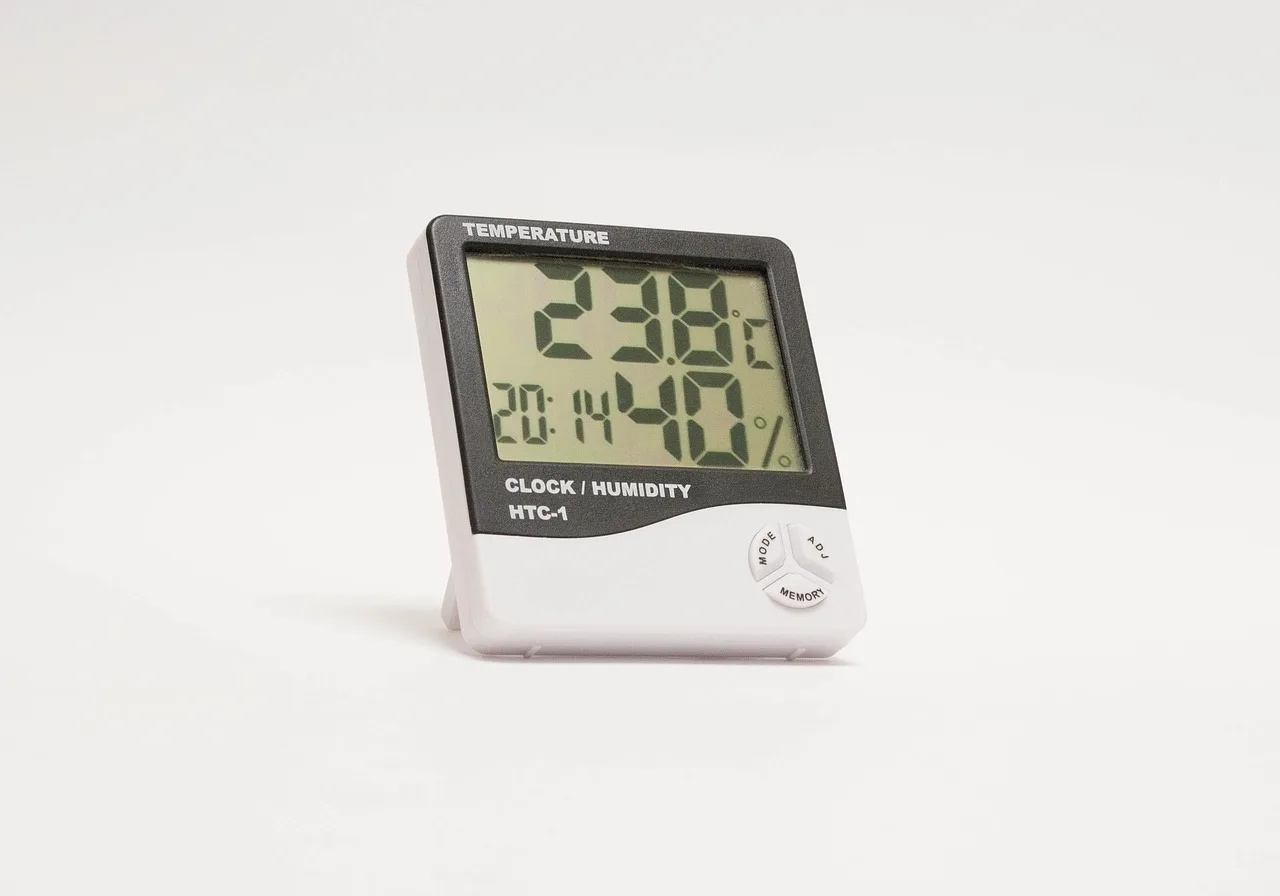
You cannot manage humidity you do not measure. A basic digital hygrometer costs a few pounds and gives you a reading you can act on. Buy two: one for the storage room, one for inside the main case or cupboard.
Humidity readings and gear risk
Reading
- Under 35% RH
- Very dry
- 35 to 50% RH
- Safe band
- 50 to 60% RH
- Borderline
- Over 60% RH
- Mould likely
- Over 70% RH
- Condensation risk
Meaning
- Under 35% RH
- Reduce dehumidifier runtime
- 35 to 50% RH
- Maintain
- 50 to 60% RH
- Increase ventilation or drying
- Over 60% RH
- Run dehumidifier continuously
- Over 70% RH
- Do not store unsealed
Action
- Under 35% RH
- 35 to 50% RH
- 50 to 60% RH
- Over 60% RH
- Over 70% RH
Place the room hygrometer at the height where gear actually sits, not on the floor and not next to a radiator. Keep it away from doorways and windows, where readings swing with every draught. Log the reading at the same time each day for a fortnight before you buy anything else.
Measuring damp
| Reading | What it means for stored gear | Action |
|---|---|---|
| Under 35% RH | Very dry; risk to rubber seals and some lubricants | Reduce dehumidifier runtime |
| 35 to 50% RH | The safe band for cameras, lenses and audio | Maintain |
| 50 to 60% RH | Borderline; mould can start on leather and fabric | Increase ventilation or drying |
| Over 60% RH | Mould growth likely on optics and cases | Run a dehumidifier continuously |
| Over 70% RH | Condensation risk on cold gear; corrosion likely | Do not store gear here without sealing it |
For most creator gear, aim for 40 to 50% relative humidity at a stable room temperature. Stability matters as much as the number. A room that swings from 40% to 70% every day does more damage than one that sits at a steady 55%.
Check the hygrometer against a second unit once a year. Cheap sensors drift, and a reading that is ten points out will have you drying a room that is already dry. If you store gear in a garage or outbuilding, expect readings well above the house and plan accordingly.
Temperature is the other half of the picture. Cold air holds less moisture, so a cold room can read low while condensation still forms on gear that warms up faster than the air around it. Let cases reach room temperature before you open them.
Dehumidifiers and desiccant options for a Bristol studio room
For a working studio room, a compressor dehumidifier is the standard answer. It pulls air across cold coils, condenses the water out and returns drier air. In a heated room above about 15°C it is efficient and cheap to run.
Named options that suit a small Bristol studio: the MeacoDry Arete One 10L or 12L, the EcoAir DD1 Classic for colder rooms, and the Pro Breeze 12L for a budget setup. All three have humidistat controls, so you set a target and the unit cycles on and off.
That matters, because running flat out wastes power and over-dries the room.
Size the unit to the space. A 10 to 12 litre compressor model handles a single room of up to around 20 square metres. For a larger unit or a cold garage, a desiccant dehumidifier such as the EcoAir DD1 works better because it keeps working at low temperatures.
Empty the tank or plumb a permanent drain. A unit that switches off when full is doing nothing. If the studio has a sink or a drain, run the hose and forget it. Clean the filter monthly; a clogged filter turns a dehumidifier into a fan.
For cupboards, drawers and flight cases, desiccants do the close work. Silica gel sachets, rechargeable silica canisters and clay desiccant packs all hold a small sealed volume dry. Rechargeable canisters are the practical choice: dry them in an oven or on a radiator and reuse them.
For camera bodies and lenses, a sealed dry cabinet is the neatest solution. Brands such as Andbon, Ruggard and Sirui make cabinets with adjustable humidity control, and they hold a set humidity without any daily attention. For audio gear, silica in the case plus a room dehumidifier is usually enough.
Do not over-dry. Below about 35% relative humidity, rubber seals, leather straps and some lubricants dry out and crack. The goal is a stable middle, not a desert.
Racking, cases and dust control for lighting and lenses
Storage furniture should get gear off the floor, out of sunlight and away from external walls. In older Bristol buildings, external walls stay cold and draw condensation, so a rack standing against one will keep the back of your gear damp.
Use steel or chrome wire racking rather than solid shelving where air must move. Wire lets the dehumidifier reach the gear. Solid chipboard shelves trap damp against the underside of whatever sits on them. Keep the bottom shelf at least 100mm off the floor.
Lighting is the bulky problem. Stands, soft boxes and LED panels should be stored dry and covered. Fabric modifiers absorb moisture and hold dust, so bag them or box them rather than leaving them rigged for weeks. Store stands upright in a rack or a stand bag, never leaning in a corner where they collect dust and get knocked.
Lenses and cameras belong in cases with foam or dividers, and the cases belong on a shelf, not the floor. Add a silica canister to each case and check it monthly. Label cases so you can find a lens without opening five of them, which is how dust gets in.
Dust control is a routine, not a product. Cover racked gear with fitted dust covers or cotton sheets. Vacuum the room with a machine that has a fine filter rather than sweeping, which just moves dust into the air. Change or clean filters on any extraction you use for set builds.
Safety checks matter as much as dust for electrical gear leaving storage. The PAT (Portable appliance testing) - HSE's answers to popular questions page covers what to check before gear returns to service. Pair it with a written intake to withdrawal process so nothing returns to the rack unchecked.
A seasonal storage routine for the South West climate
Damp in the South West is seasonal, so your routine should be too. The wet months run from October to March, when outdoor humidity stays high and heating cycles make indoor air swing. April to September is easier, but storm weeks still push humidity up.
A simple monthly cycle works for most Bristol studios:
Monthly storage routine
- Read and log room and case hygrometers
- Recharge silica canisters and replace soft sachets
- Check dehumidifier filter, tank and humidistat
- Open each case, inspect for haze or mould
- Wipe shelves, covers and vacuum floor
- Test one piece of stored electrical gear
At the autumn changeover, do a deeper pass. Move everything off the floor, check external walls for cold patches or damp, and reset the dehumidifier target for the wetter months. At the spring changeover, reduce dehumidifier runtime and check that nothing has over-dried.
Use a checklist so the routine survives busy weeks:
- Room hygrometer read and logged
- Case hygrometer read and logged
- Silica canisters recharged
- Dehumidifier filter cleaned, tank emptied or drain clear
- Cases opened, inspected and closed
- Racking, covers and floor cleaned
- One stored item tested and returned to service
If a case shows mould, isolate it. Wipe hard surfaces with isopropyl alcohol, discard foam that has gone musty, and dry the case fully before gear goes back in. Mould spores spread to whatever is stored nearby.
For gear with known faults or recalls, a storage check is a good moment to catch them. The scenarios in broken update to a product alert are worth rehearsing before a shoot rather than during one.
Local business support and licensing context for Bristol studios
Bristol is a UNESCO City of Film with a strong independent production and animation sector, and a large creator community around it. That density is useful: there are local suppliers, repairers and rental houses within a short drive.
If you run a studio as a business, even a small one, the council's Information for businesses pages cover registration, licensing and support. Check whether your use of a space needs planning permission or a change of use, particularly if you are converting a residential room or a unit.
Health and safety duties apply to studio storage as much as to shooting. The Health and safety basics for your business guidance covers risk assessment, and stored gear is part of that picture: stacked cases, heavy stands and trailing cables are all hazards.
Equipment safety guidance from the Equipment and machinery - HSE pages is worth reading if you store or operate anything beyond cameras and lights. Racking loaded with heavy cases needs to be rated and fixed, not just assembled.
Keep records. A simple log of humidity readings, dehumidifier servicing and equipment tests supports an insurance claim and shows a buyer that the gear has been looked after. It also feeds the checks in room to rights when gear leaves storage for a job.
VAT, product marking and business registration all apply to studio gear bought and sold in the UK. If you buy and resell equipment, keep receipts and check the current rules on VAT and the UKCA mark before you advertise anything as new.
Common questions
What humidity should I keep my studio at in Bristol?
Aim for 40 to 50% relative humidity at a stable temperature. Below 35% dries out seals and lubricants, and above 60% allows mould to start on optics, leather and fabric.
Do I need a dehumidifier if I use silica gel?
Yes, for a room. Silica protects small sealed volumes such as cases and cupboards, but it cannot dry a whole studio. Use a dehumidifier for the room and desiccant for what sits inside it.
How often should I recharge silica canisters?
Monthly in the wet season and every two to three months in summer. Recharge them when the indicator changes colour or the canister feels heavy, and dry them fully before reuse.
Is a desiccant or compressor dehumidifier better for a cold garage?
A desiccant model. Compressor units lose efficiency below about 15°C, while desiccant units keep working in cold rooms and outbuildings.
Can damp gear be repaired?
Sometimes. Light surface corrosion and early haze can be cleaned by a specialist, but mould etched into lens coatings and corroded circuit traces are usually permanent. Prevention is cheaper than repair.
Does storing gear in cases prevent dust?
It reduces it, but not entirely. Cases still admit fine dust when opened, so add a silica canister, keep cases off the floor and inspect contents monthly.